Footnote of the Week: California and Texas have a Common Export — Transferable Energy Tax Credits
We calculate that in more than 90% of cases, project developers and manufacturers in California and Texas ultimately transferred their tax credits to out-of-state buyers.


When it comes to clean energy in America, California and Texas are a central part of the story. The Golden State leads the nation in installed solar power, while the Lone Star State claims second place. Meanwhile, Texas produces far more wind power than any other state. The charts below track the remarkable year-on-year growth in electricity production from large-scale solar and wind in the nation’s two most populous states. (California’s vast adoption of rooftop solar isn’t presented here, but tells a similar growth story.)
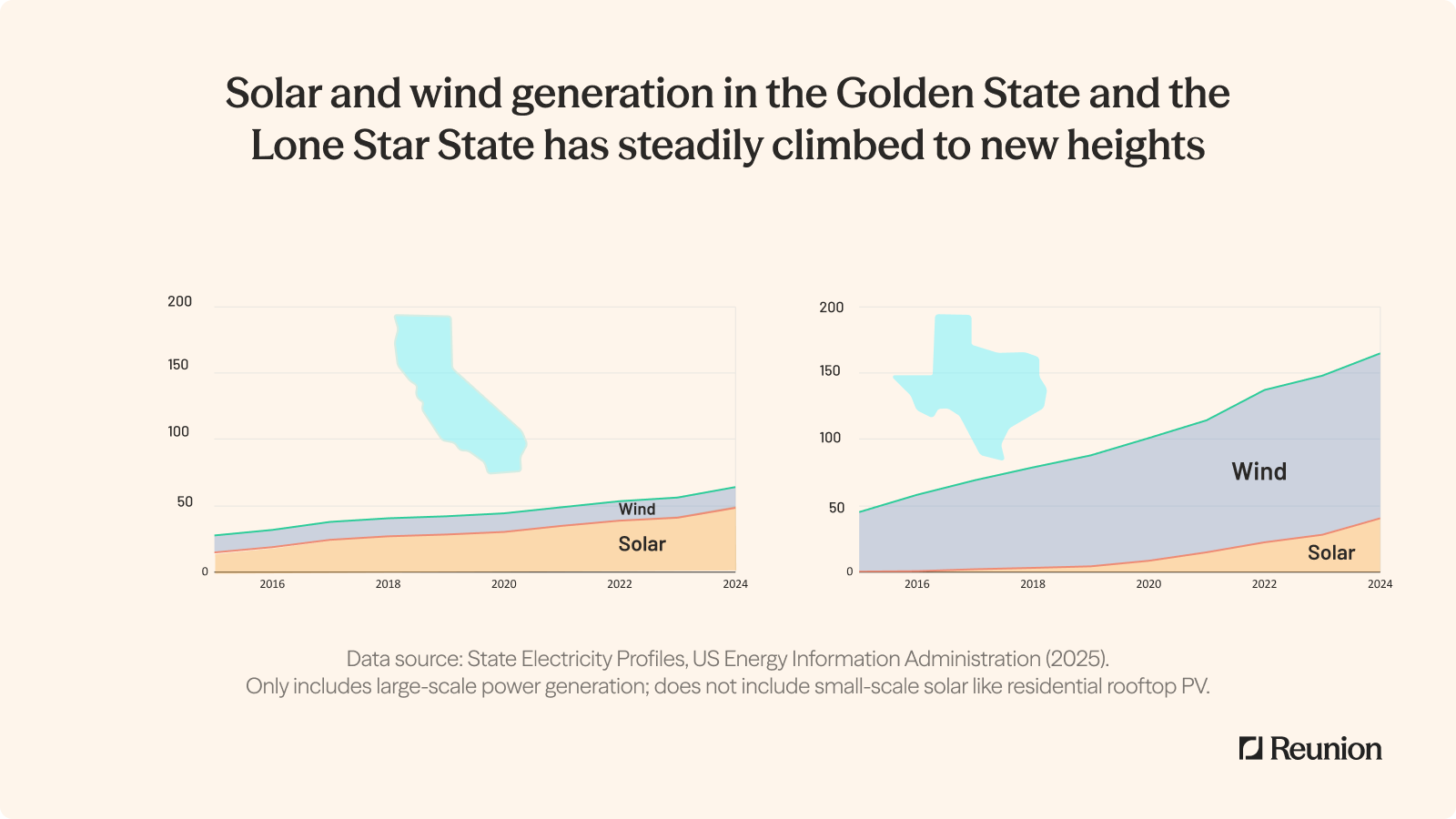
This expansion of renewable power has occurred alongside the rise of other innovations in these states – including energy storage and manufacturing of clean energy components (e.g., solar modules and battery cells).
Reunion’s portfolio of work has included numerous clean energy deals in California and Texas – ranging from wind turbines to fuel cells to batteries. Since these projects generate transferable tax credits, we were curious to what degree these credits have been transferred to in-state entities versus out-of-state entities.
We calculate that in more than 90% of cases – across many technology types and deal types (§45 production credit, §45X manufacturing credit, and §48 investment credit) – project developers and manufacturers in California and Texas ultimately transferred their tax credits to out-of-state buyers. We inferred buyers’ location from the address of their corporate headquarters. (Note: Our assessment makes an allowance for the reality that a portion of Californian and Texan buyers acquire in-state credits in a manner that is neither visible to nor transacted via Reunion’s platform.)
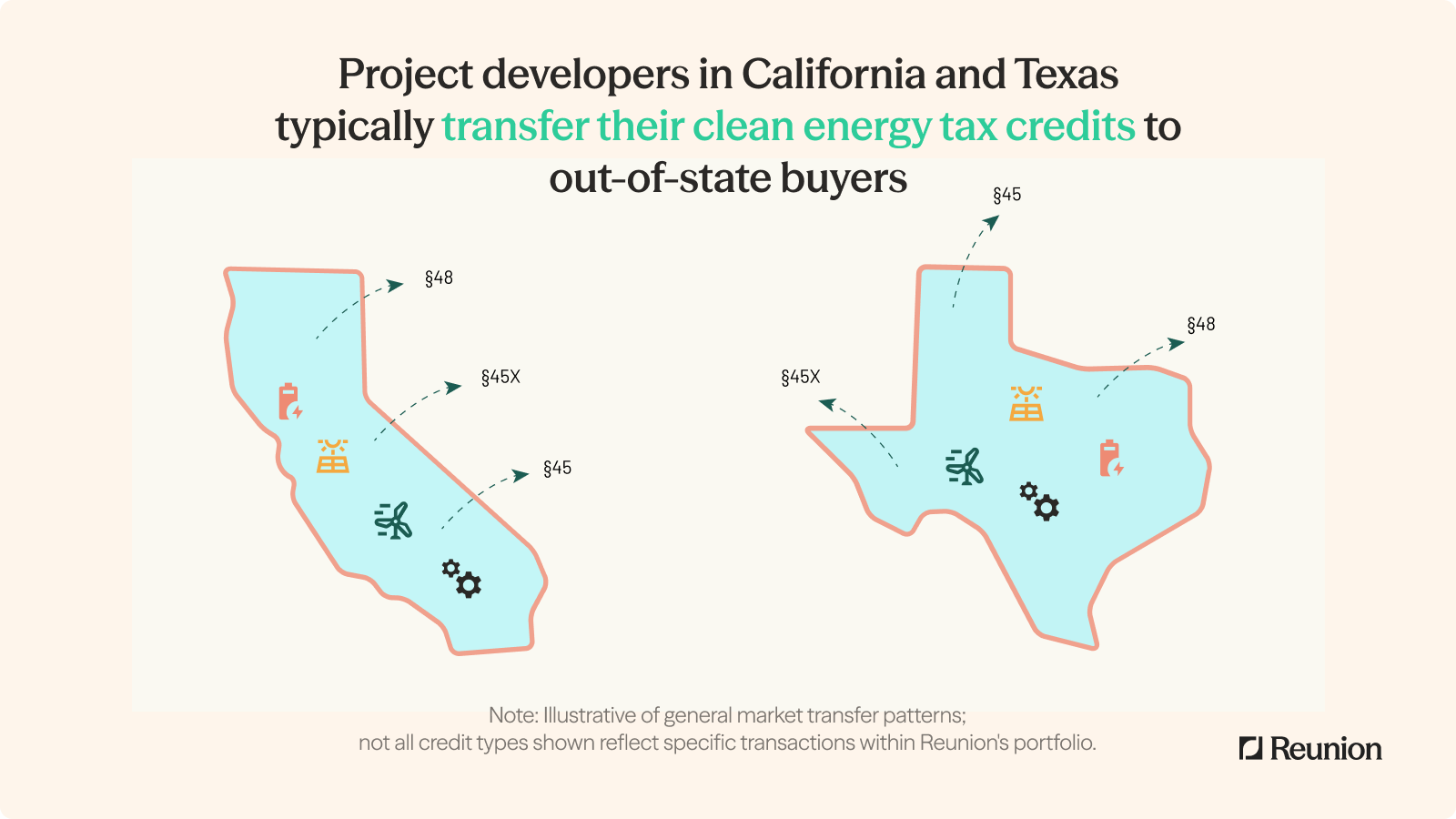
The frequent export of tax credits may seem surprising at first glance for California and Texas, given that many Fortune 1000 companies are headquartered in those states and likely have the tax appetite to purchase transferable credits. However, the interstate movement of these tax credits is a positive validation of their transferable nature – which was designed to accelerate the deployment of clean energy nationwide, and is making good on that promise through a geographically flexible framework.

