§45Q outlook: Structural advantages and diligence for an emerging credit
A guide to the carbon oxide sequestration credit as it enters the transfer market at scale

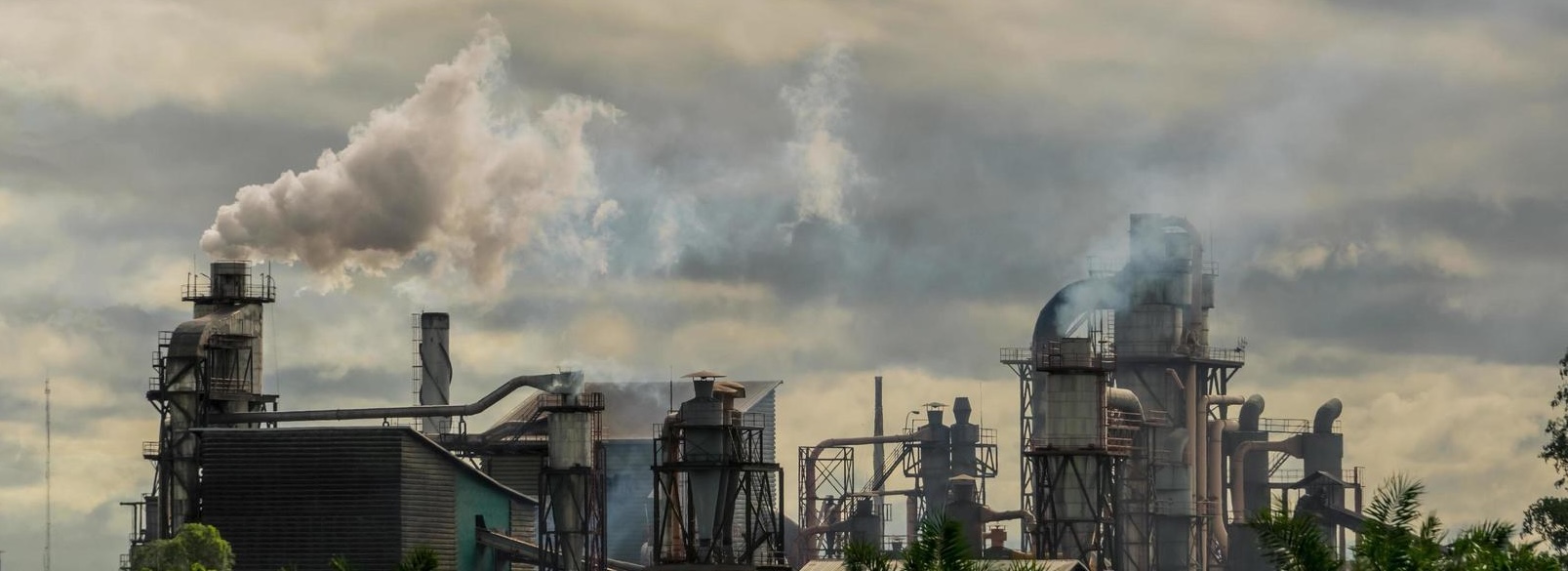
§45Q is positioned to become a more meaningful production tax credit ("PTC") option as U.S. carbon capture infrastructure grows. Major oil and gas companies, including Occidental Petroleum and Woodside Energy, have announced plans to bring sizable carbon capture projects online in 2026, generating §45Q credits. More broadly, industry analysts estimate that U.S. carbon capture capacity will grow eightfold from 2024 to 2030, from approximately 22 to 176 million metric tons per year of CO2. Not all credits will reach the transfer market, but we expect transfer volumes to grow alongside credit generation.
There are several structural advantages that §45Q offers to tax credit buyers:
- Creditworthy sellers. Many sponsors are publicly traded oil and gas or industrial companies that have strong balance sheets backing the tax credits.
- Favorable pricing. §45Q currently trades in the low $0.90s, below §45 PTC pricing, even with sponsors providing guarantees from investment-grade entities.
- Long credit period. §45Q projects generate credits for 12 years once the project is placed in service. Projects are eligible for credits as long as construction starts before January 1, 2033. As a result, §45Q projects can generate credits well into the 2040s, in contrast with credits like §45Z that phase out at the end of 2029.
- Favorable Foreign Entity of Concern ("FEOC") treatment. The One Big Beautiful Bill Act (OBBBA) applied lighter FEOC restrictions to §45Q than to §45Y, §48E, or §45X. In particular, §45Q is not subject to material assistance sourcing rules and is also not subject to effective control rules, which can carry complex diligence requirements.
The credit also presents tradeoffs. Unlike other PTCs, §45Q credits have a three-year recapture tail tied to storage performance, so geologic storage will require careful diligence.
Background
Carbon capture projects are designed to prevent carbon dioxide or carbon monoxide from entering the atmosphere. In a typical project, emissions generated by industrial operations are captured before they would have otherwise been released and either permanently stored underground or used in downstream industrial processes. Direct air capture (DAC) projects remove carbon dioxide directly from ambient air.
Mechanics
Eligibility
§45Q was enacted under 26 U.S. Code §45Q to support investment in carbon capture, utilization, and sequestration (CCUS) infrastructure. The credit is available for projects that capture qualified carbon oxide from point-source industrial or bioenergy facilities, or from ambient air via direct air capture (DAC). Qualified end uses include:
- Geological sequestration: permanent underground storage
- Enhanced oil recovery (EOR): injection into a well to extract crude oil
- Utilization: fixation through photosynthesis/chemosynthesis, chemical conversion into a product that securely stores the carbon oxide, or any other commercial use (excluding EOR)
Credits generally remain available for 12 years after the carbon capture equipment is placed in service. There is no cap on the amount of §45Q credits a project may generate during its applicable credit period.
Credit values
§45Q provides a per-metric-ton federal tax credit tied to the amount of qualified carbon oxide captured and properly disposed of or utilized. Assuming PWA compliance, credit values depend on three key factors:
- Timing: when a project was placed in service
- Capture method: whether the project captures emissions from an industrial source or through DAC
- End use: whether the captured carbon is geologically stored or utilized
For projects placed in service after July 4, 2025, PWA-compliant rates are:
- Industrial and power facilities: $85 per metric ton (MT)
- Direct air capture (DAC): $180 per MT
The $17 base credit ($36 for DAC) is fixed for taxable years beginning in calendar years 2025 and 2026. Beginning in 2027, both amounts are adjusted annually for inflation using the §43(b)(3)(B) inflation adjustment factor, with 2025 as the base year.
Under earlier policy regimes, projects involving capture methods such as utilization or EOR were subject to lower credit amounts as compared to geological storage. The OBBBA leveled the playing field, making the credit rate disposal type-agnostic for facilities or equipment placed in service after July 4, 2025.
§45Q projects that began construction before January 29, 2023 are exempt from Prevailing Wage and Apprenticeship (PWA) requirements. Projects that fail to meet PWA requirements receive a credit at one-fifth of the full rate described in the table above.
Elective pay
Projects may monetize §45Q credits through transferability under §6418 or, in certain cases, through elective pay under §6417. Elective pay is commonly referred to as "direct pay."
Direct pay generally allows eligible taxpayers to receive the full $1.00 value of the credit as a cash refund from the IRS, though sponsors may be subject to long waiting times for refunds. For taxable entities, direct pay is generally limited to the first five years after the project is placed in service. An election by a non-applicable-entity §45Q claimant applies to "the taxable year in which such equipment is placed in service and the 4 subsequent taxable years with respect to such equipment which end before January 1, 2033."
During that period, the taxpayer may elect to revoke the election, but the revocation "shall apply to the applicable year specified in such election and each subsequent taxable year," and "may not be subsequently revoked." Tax-exempt and governmental entities may qualify for direct pay throughout the full 12-year credit period.
Due diligence
The §45Q PTC presents several key areas of focus during due diligence. Not only is the credit subject to PWA compliance and FEOC restrictions, it is the only production tax credit subject to recapture. Standard §45Q diligence covers project qualification (including BOC and PIS dates, single project aggregation under §8.01 of Notice 2020-12, and capture thresholds), secure storage substantiation (MRV plans, subpart RR data, and leakage analyses), capture and verification methodology, PWA compliance for post-January 29, 2023 BOC facilities, and the three-year recapture tail.
Qualification and quantification
To qualify for §45Q, a project generally must involve either an industrial facility or a direct air capture facility. Industrial facilities include projects that capture emissions from manufacturing operations, fuel combustion, fuel cells, or fugitive emissions sources.
Facilities must satisfy minimum annual capture thresholds to qualify for the credit. These thresholds vary based on when a project begins construction. For projects that begin construction on or after August 16, 2022, the annual capture thresholds are:
- 1,000 MT of CO2 per year for direct air capture (DAC) facilities
- 18,750 MT of CO2 per year for electricity-generating facilities with carbon capture capacity of 75% of baseline CO2 production
- 12,500 MT of CO2 per year for any other facility
Qualified carbon oxide generally includes carbon dioxide that would otherwise be emitted into the atmosphere but is instead captured and properly measured, verified, and disposed of or utilized within the United States. DAC projects may also qualify for credits tied to carbon dioxide removed directly from ambient air.
Existing carbon capture equipment may still qualify for enhanced post-2022 credit values if incorporated into a sufficiently upgraded carbon capture process train. Under the 80/20 rule, the fair market value of used equipment generally cannot exceed 20% of the total value of the retrofitted process train.
Facilities must begin construction before January 1, 2033, or the facility's original planning and design must include installation of carbon capture equipment to be eligible under §45Q.
§45Q qualification not dependent on Class VI permit
While Class VI permits are typically used for dedicated carbon sequestration wells, §45Q eligibility does not depend entirely on the type of permit used. Instead, the IRS focuses on whether the project complies with applicable EPA underground injection rules and can demonstrate secure geological storage.
Recent IRS and Treasury guidance created safe harbor to substantiate geological storage volumes
For projects that include geologic storage, Treasury Regulation §1.45Q-3(b) requires specific substantiation to qualify under §45Q. Originally, sponsors were directed to report through subpart RR of the Greenhouse Gas Reporting Program (GHGRP), which has historically served as the primary framework for demonstrating secure geological storage. However, the EPA's recent proposal to eliminate subpart RR monitoring, reporting, and verification (MRV) requirements after the 2024 reporting year caused uncertainty.
In December 2025, Treasury and the IRS released interim guidance in Notice 2026-1, establishing a temporary "safe harbor" allowing taxpayers to substantiate §45Q sequestration volumes through independent engineer or geologist certification in lieu of subpart RR reporting.
The alternate substantiation pathway would apply only if EPA does not implement a replacement 2025 reporting regime by June 10, 2026, and taxpayers must still comply with the underlying subpart RR technical monitoring and recordkeeping standards in effect as of December 31, 2025.
No credit “stacking”
§45Q may not be "stacked" — that is, simultaneously claimed — with §45V, §45Y, §45Z, §48, §48C, or §48E credits with respect to the same qualified carbon oxide or facility. In particular, §45Y(b)(1)(D) disallows a §45Y credit for any taxable year for facilities for which a §45Q credit is allowed.
Structure
For carbon capture equipment placed in service after February 9, 2018, the §45Q credit generally belongs to the taxpayer that owns the carbon capture equipment and physically or contractually ensures the capture and disposal, utilization, or use as a tertiary injectant of the qualified carbon oxide.
Only one taxpayer may claim §45Q credits for each independently operating carbon capture system, and that taxpayer need not own every component. Revenue Ruling 2021-13 confirms this for situations where the carbon capture equipment owner is a different party than the host facility owner — a common structure at ethanol plants partnering with separate carbon capture and storage operators.
Recapture
Under §45Q(f)(4), credits may be subject to recapture if previously sequestered carbon oxide later leaks during the recapture period. The recapture period begins on the date of first injection for disposal in secure geological storage or use as a tertiary injectant. It ends on the earlier of (i) three years after the last taxable year in which the taxpayer claimed a §45Q credit or was eligible to claim a credit that it elected to carry forward, or (ii) the date monitoring obligations end under the standards in §1.45Q-3(b)(1).
A recapture event occurs only to the extent leaked tons in a taxable year exceed the amount newly stored during the same year. Excess leaked tons are allocated to previously claimed credits on a LIFO basis, reaching back no more than three years, and the resulting recapture amount is reported as an increase in tax liability in the year the leak is identified.
Where credits have been transferred under §6418, recapture liability flows to the transferee based on its share of credits, with the eligible taxpayer remaining exposed for any retained portion. Transferee indemnity packages typically address this allocation through gross-up obligations covering the buyer's share of recapture, interest, and penalties.
Certain force majeure-type events such as volcanic activity or a terrorist attack do not trigger recapture liability. Where multiple taxpayers claimed credits associated with the same process train, recapture liability is allocated among the claimants on a pro rata basis.
Prevailing wage and apprenticeship compliance
Projects that satisfy prevailing wage and apprenticeship requirements may qualify for a five-time multiplier on the base credit amount. PWA compliance generally requires payment of prevailing wages to laborers and mechanics and impose minimum apprenticeship labor hour requirements during construction. PWA requirements also apply to alterations and repairs during the full, 12-year credit generation period.
Bonus credit adders (or lack thereof)
The §45Q PTC does not qualify for any of the three bonus credit adders — energy community, low-income community, or domestic content.
Foreign entity of concern restrictions
Although §45Q is a FEOC-impacted credit, it is not subject to effective control restrictions, which makes this credit easier to diligence and generally more attractive to risk-averse buyers.
For §45Q transactions, the OBBBA imposed taxpayer-level prohibited foreign entity (PFE) restrictions but did not extend the broader "material assistance" sourcing rules that apply to §45Y, §48E, and §45X. As a result, a §45Q project generally is not disqualified merely because its equipment, components, or supply chain involve Chinese or other PFE-linked manufacturers. Instead, the primary restriction is that neither the taxpayer claiming the credit nor the transferee purchasing the credit may be a PFE, which includes both specified foreign entities (SFEs) and foreign-influenced entities (FIEs).
In a §45Q transfer, diligence should focus primarily on entity-level PFE status. For the seller, §45Q disallows credits for taxable years beginning after July 4, 2025 if the taxpayer claiming the credit is an SFE or an FIE, but the FIE test is applied without the §7701(a)(51)(D)(i)(II) "effective control" payment/licensing rule.
In practice, seller diligence should focus on ownership, governance, covered-officer appointment rights, and debt held by SFEs, including ties to China, Russia, Iran, or North Korea, rather than contractual "effective control" arrangements that are relevant to other credits.
For the buyer, §6418 specifically prohibits transfers of §45Q credits to SFEs, which is narrower than a full PFE/FIE buyer-side prohibition. Unlike §45Y, §48E, and §45X, §45Q is also not subject to project-level material assistance cost ratio (MACR) testing tied to equipment or component sourcing.
Pricing considerations
Nascency
In Reunion's experience, corporate buyers tend to approach new credits with a measure of caution: they generally prefer to purchase credits with which they and their legal partners are familiar. Although §45Q has been available since 2008, the credit is "new" in the context of transferability.
We expect the relative newness of §45Q transfers to present a modest discount relative to other production credits for a period of time — perhaps six to 12 months — even after factoring in recapture.
Generated in sizable "per seller" volumes
Carbon capture equipment is being built out at significant scale, particularly across the oil and gas sector. The resulting credit volumes should establish §45Q as a meaningful source of supply in the transferable credit market, especially for $1B+ taxpayers seeking to make large purchases that "move the needle" without executing an unwieldy number of transactions.
Recapture risk
§45Q is the only production tax credit subject to recapture, and corporate taxpayers consistently place that risk at the center of their tax credit acquisition strategies. Similar to investment tax credits — which are also subject to recapture and generally trade at a discount to "mainstream" production tax credits — we expect buyers to incorporate recapture risk into their §45Q commercial negotiations.
Access to direct pay
Access to direct pay — which allows eligible taxpayers to realize the full $1.00 per credit value, albeit potentially on a delayed timeline relative to transferability — should create a pricing floor for generators that are less cashflow sensitive. Creditworthy oil and gas majors are a prime example.
A similar dynamic exists in the §45X market: many creditworthy §45X sellers approach the transferability market with a relatively firm minimum price because they have the alternative option of receiving the full $1.00 credit value through direct pay rather than transferring the credits at a discount to another taxpayer.
Developers may be less cashflow sensitive
Generally, §45Q developers are not overly reliant on the monetization of their credits to fund operations, so timing of cash becomes less critical. They can wait, in other words, for favorable commercial terms. (As we've noted before, tax credit prices generally rise as a given "vintage" ages.) This stands in contrast to many solar and wind developers that rely on cash from tax credit sales to fund further projects.
Insights from a recent Reunion §45Q transaction
In Q1 2026, Reunion facilitated a $30M §45Q transfer between two Fortune 500 companies — an experienced buyer and a first-time seller — covering a portfolio of four CCUS facilities.
Beginning of Construction (BOC) and Placed in Service (PIS) dates heavily inform the scope of due diligence
The four facilities had different BOC and PIS dates, so PWA obligations (driven by BOC) and credit rates (driven by PIS) varied across the portfolio. Reunion performed a "vintage analysis" at scoping to map the requirements applicable to each facility.
“Single project” treatment is a key §45Q diligence item
Two of the seller's facilities relied on a "single project" determination under the IRS eight-factor test (Notice 2020-12) to meet annual minimum capture thresholds.
Reunion and the buyer’s counsel devoted significant diligence attention to confirming that the two facilities would be treated as a single project and, therefore, satisfy the minimum carbon capture thresholds required to qualify for §45Q credits.
Seller access to direct pay has created a soft price "floor"
Sellers of §45Q credits are eligible for direct pay, which gives sellers an alternative path to tax credit monetization; this is particularly true for investment-grade sellers that have the financial wherewithal to wait for better pricing. The ability to opt for direct pay gives sellers a credible negotiation lever, which has resulted in pricing in the low 90s despite typical buyer caution on new credits.
Key regulatory references
- §45Q statute
- Treas. Reg. § 1.45Q
- IRS Notice 2020-12
- §6417
- §6418
- EPA Underground Injection Control Program
- IRS Notice 2026-1
- IRS Notice 2026-15
- Pub. L. 119-21
- 26 U.S. Code §7701

